Best cubby houses in Australia: how to choose one that lasts
This page may contain affiliate links. See our affiliate disclosure.
A cubby house is one of those backyard purchases that looks simple until you start comparing. Some are a flat-pack timber cottage with a verandah. Some are a moulded plastic playhouse you can carry in two pieces. Others have a raised deck, a slide and a ladder, and take a weekend (or longer) to put together. The right choice depends on your yard, your climate, the ages of your kids and how much maintenance you are willing to do.
This is a buying guide, not a hands-on test. We have not tested the products named here, and we do not publish prices, star ratings or testimonials. Where we name a retailer or brand, it is because we confirmed on its Australian website that it sells cubby houses. Always check the maker’s own size, age and assembly information before you buy.
Start with the yard, not the product
Most disappointments come from buying first and measuring later. Before you browse, work out:
- Where it will go. Level ground, away from fences and sheds, with a spot where you can see it from the house or deck. Kidsafe recommends positioning play equipment in a shaded area that is easily supervised, and away from fences and other equipment.
- How much space you really have. The footprint on the product page is the cubby only. Kids need clear space around it for play and for getting in and out. Our guide to Cubby houses for small yards in Australia: what fits and what to skip covers tight blocks.
- What you need to clear. Tree roots, drainage, a slope, an irrigation line. See Preparing your yard for a cubby house: site, base and drainage.
- Whether you need approval. In many cases you will not, but there are limits on size, height and location. See Do you need council approval for a cubby house in Qld, NSW or Vic?.
The main types of cubby house
Timber cottage-style cubbies
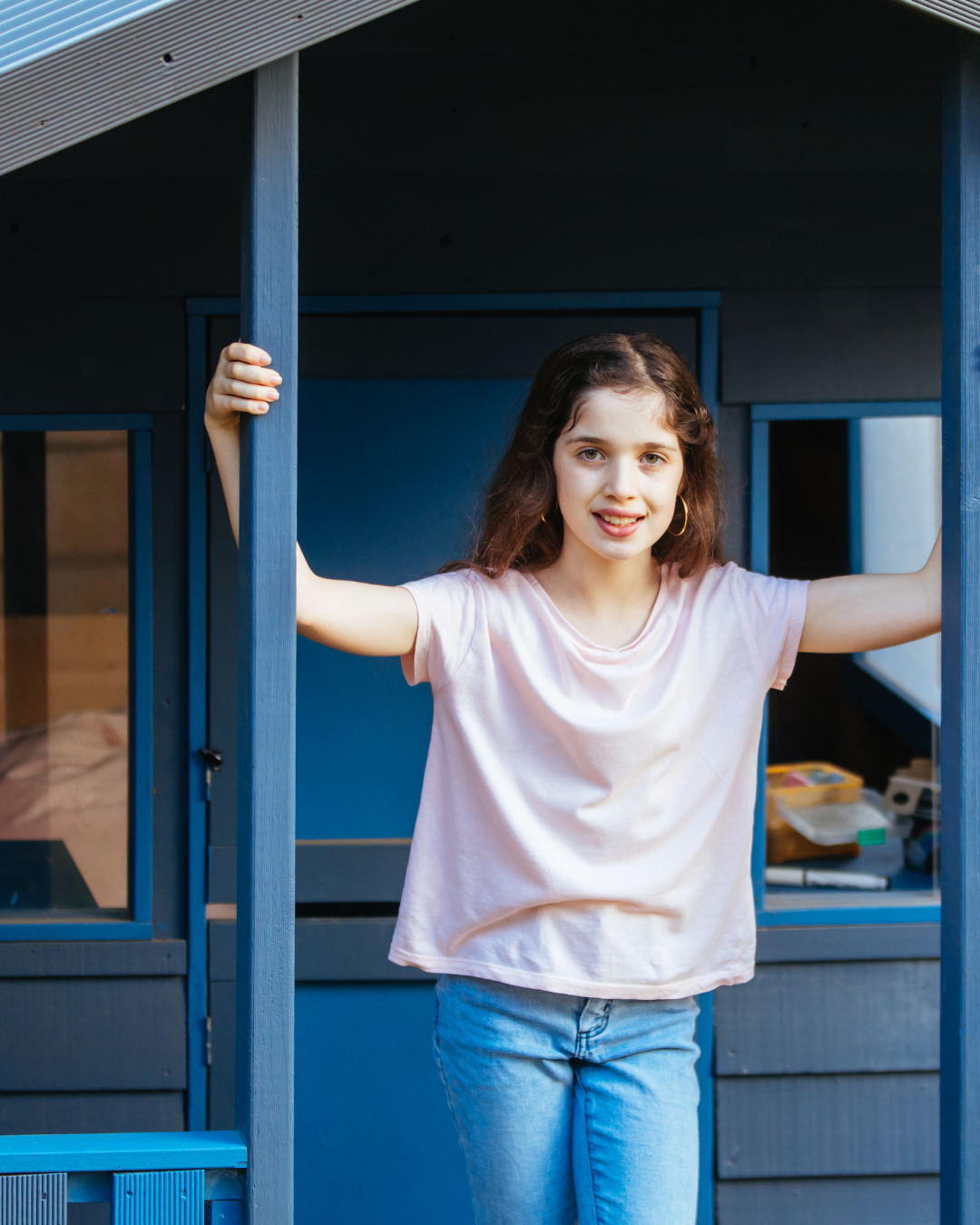
The classic. A timber frame, a pitched roof, a door and windows, sometimes a little porch or window box. They suit families who want something that looks like part of the garden and can be painted to match the house. They also need the most care: sealing, repainting and regular checks for splits, splinters and rot. If you are weighing this style against plastic, read Wooden vs plastic cubby houses in Australia: which is better?.
Lifespan Kids and Yardgames both list timber cubbies on their Australian sites, and Kidzshack describes its range as wooden cubby houses. You can browse the cubby range at Lifespan Kids or the Yardgames wooden cubbies, and compare them with what is listed under wooden cubby houses on Amazon Australia.
Moulded plastic playhouses
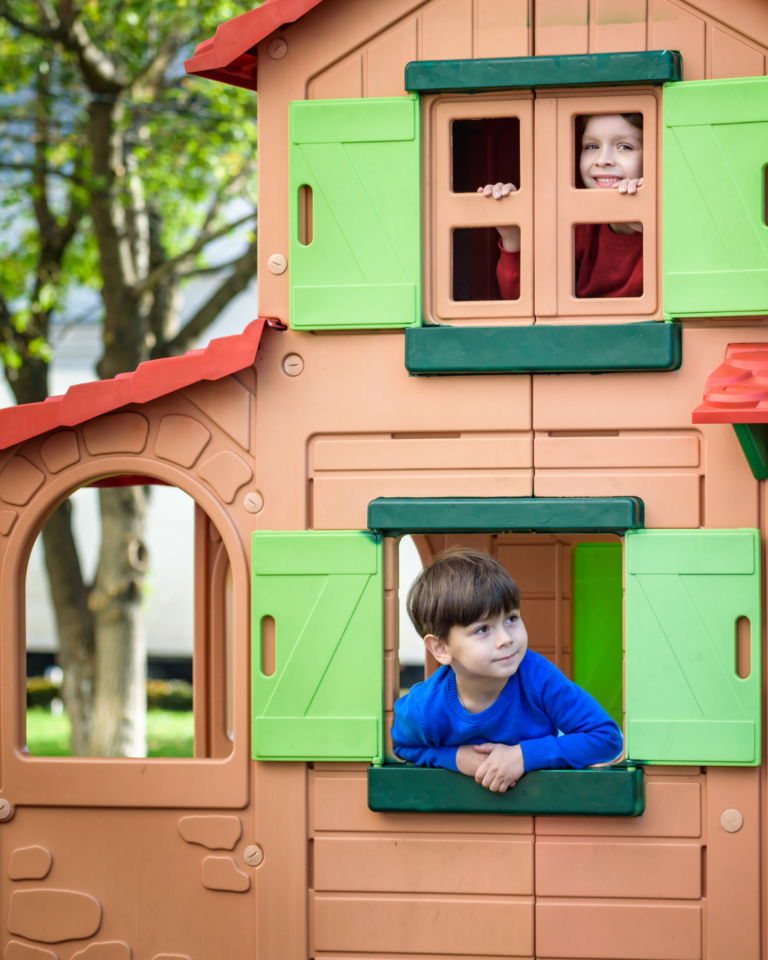
Lighter, usually quicker to set up and often easier to hose down. They suit toddlers and small yards, and some families like that there is no painting or sealing to do. The trade-offs are sun exposure over many summers and the fact that they are often smaller inside. Yardgames has a separate playhouses category, and you can also look at plastic cubby houses on Amazon.
Elevated cubbies and cubbies with slides
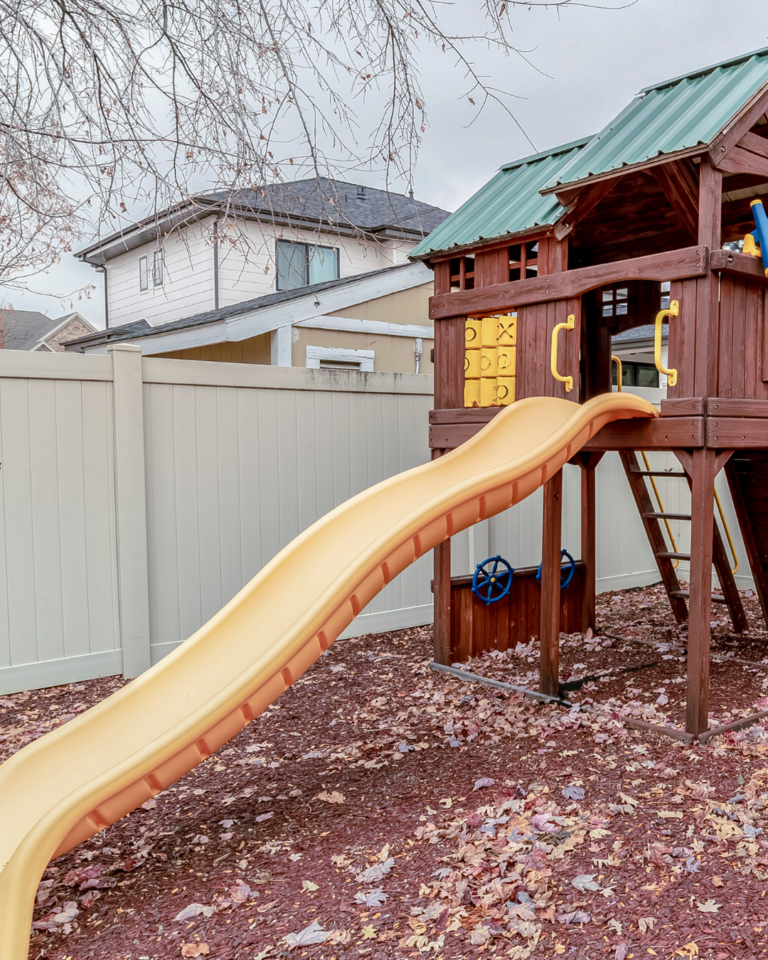
A raised platform gives kids a “tree house” feel and turns the space underneath into a second play area. It also introduces fall height, which changes the safety conversation. We cover this properly in Elevated cubby houses in Australia: platform height, safety and surfacing and Cubby houses with slides in Australia: what to check before you buy. If your child is young, a ground-level cubby is the simpler choice.
Play centres and combined sets
Some retailers sell wooden play centres that combine a cubby with swings, climbing walls or a slide. They tend to be larger, take longer to assemble and need more clear space and surfacing. Yardgames lists wooden play centres and swing sets separately.
Indoor cubbies and play tents
Not every family has a yard. Indoor cubbies and play tents are a different product with different safety considerations. See Indoor cubby houses and play tents in Australia: what to know.
What to check before you buy
Use this as a shopping checklist, and see Cubby house buying checklist: questions to ask before you pay for a longer version you can take to a retailer.
- Age range. Use the maker’s stated age range, not your guess. A cubby that suits a four-year-old may not suit a toddler or a ten-year-old.
- Timber and treatment. Ask what timber it is and how it has been treated, especially for any part touching the ground. See Cubby house timber treatment and termites: what to ask and what to check.
- Fixings and finish. Look for smooth, dressed timber, no protruding bolts and no gaps where a head, finger or limb could be trapped.
- Guard rails and ladders. For any raised platform, check for guardrails and secure ladder fixings. Kidsafe’s guidance is that elevated platforms should have guardrails or barriers.
- Roof and access. The design should not make it easy for kids to climb onto the roof.
- What is included. Paint, sealant, a base, anchors and softfall are often not in the box.
- Assembly. Check how many people it needs, and whether the retailer or maker offers an installation service. See Cubby house assembly tips: how to put a kit together without the stress.
- Warranty and spare parts. Ask how you would get a replacement panel, a ladder or a hardware pack.
- Delivery. Large, heavy boxes can be awkward to move into a backyard. Check access along the side of the house.
A note on Australian Standards
Shoppers often ask whether a cubby house has to comply with a standard. For private backyards there is no single mandatory standard for cubby houses. The playground standard AS 4685 is written for public and institutional playgrounds, and the Kidsafe guidance for home play equipment points to AS/NZS 8124.6, which covers swings, slides and similar activity toys for domestic use. We explain this in Cubby house safety standards in Australia: AS 4685, AS/NZS 8124.6 and Kidsafe. If a product claims compliance, ask the seller which standard and which part.
Safety is mostly about what is underneath
The biggest backyard risk with play equipment is falls onto hard ground. Kidsafe says to provide impact-absorbing surfacing around elevated or stationary equipment more than 600 mm high, and never to use play equipment on hard surfaces such as concrete or bricks. Budget time and money for surfacing, not just the cubby. We cover this in Cubby house surfacing and fall safety: mulch, sand and soft-fall in Australia.
Kits, flat-packs and DIY
A cubby house kit is usually the easiest route for a first-timer, because the timber is cut and the hardware is supplied. Building from plans gives you more control over size and style, but takes more time and tools. Our comparison is in Cubby house kit vs DIY build in Australia: which suits you?.
Accessories worth thinking about early
Once the cubby is up, kids tend to want to fit it out. A play kitchen, a mailbox, a window box or a shop counter can extend the life of the cubby for a few more years. See Cubby house accessories: practical and play ideas for Aussie backyards and Cubby house ideas for Australian backyards: ways kids use their cubbies.
Our approach to recommendations
We do not pick a single “best” cubby house, because the best one for a tight Brisbane townhouse yard is not the best one for a large block in country Victoria. Instead, we focus on the questions to ask and the checks to make. Where we link to a retailer, the link may be an affiliate link, and we may earn a commission if you buy, at no extra cost to you. The wording is on our Affiliate disclosure page.