Cubby houses for small yards in Australia: what fits and what to skip
This page may contain affiliate links. See our affiliate disclosure.
Australian blocks keep getting smaller, and plenty of families are working with a courtyard or a modest rectangle of lawn. A cubby house can still work. The trick is to buy for the space you actually have, which means measuring properly and thinking about the area around the cubby as well as the cubby itself.
This guide is general advice, not a product test. We do not publish prices or invented dimensions. Use the maker’s own measurements for any product you are considering.
Measure the space, then measure it again
Start with a tape measure, or a measuring wheel for a bigger yard. Mark the intended footprint on the lawn with stakes, string or chalk so you can see how much of the yard it will take. Then check:
- The cubby footprint plus its extras. A porch, a window box, a ladder or a slide can all stick out beyond the main body. Use the full assembled dimensions from the maker.
- Clear space around it. Lifespan Kids suggests leaving around one to two metres around a cubby house for safe play. Whatever you choose, kids need room to run past, climb in and out and play on the ground nearby.
- Distance from fences and other equipment. Kidsafe’s advice is to position play equipment away from backyard fences and other equipment, so there is enough room for safe play. Climbing near a fence can also give kids a way over it.
- Overhead clearance. Check for clothes lines, eaves, power lines and branches above the spot.
- Your own access. You need space to carry panels through, to walk around the cubby for maintenance and to mow.
Local rules still apply on small blocks
Setbacks from boundaries matter more when space is tight. In New South Wales, for example, the exempt development rules for cubby houses include distances from lot boundaries, a maximum floor area and a maximum height. Queensland and Victoria have their own rules. See Do you need council approval for a cubby house in Qld, NSW or Vic? before you buy.
Compact styles to consider
Ground-level cubbies
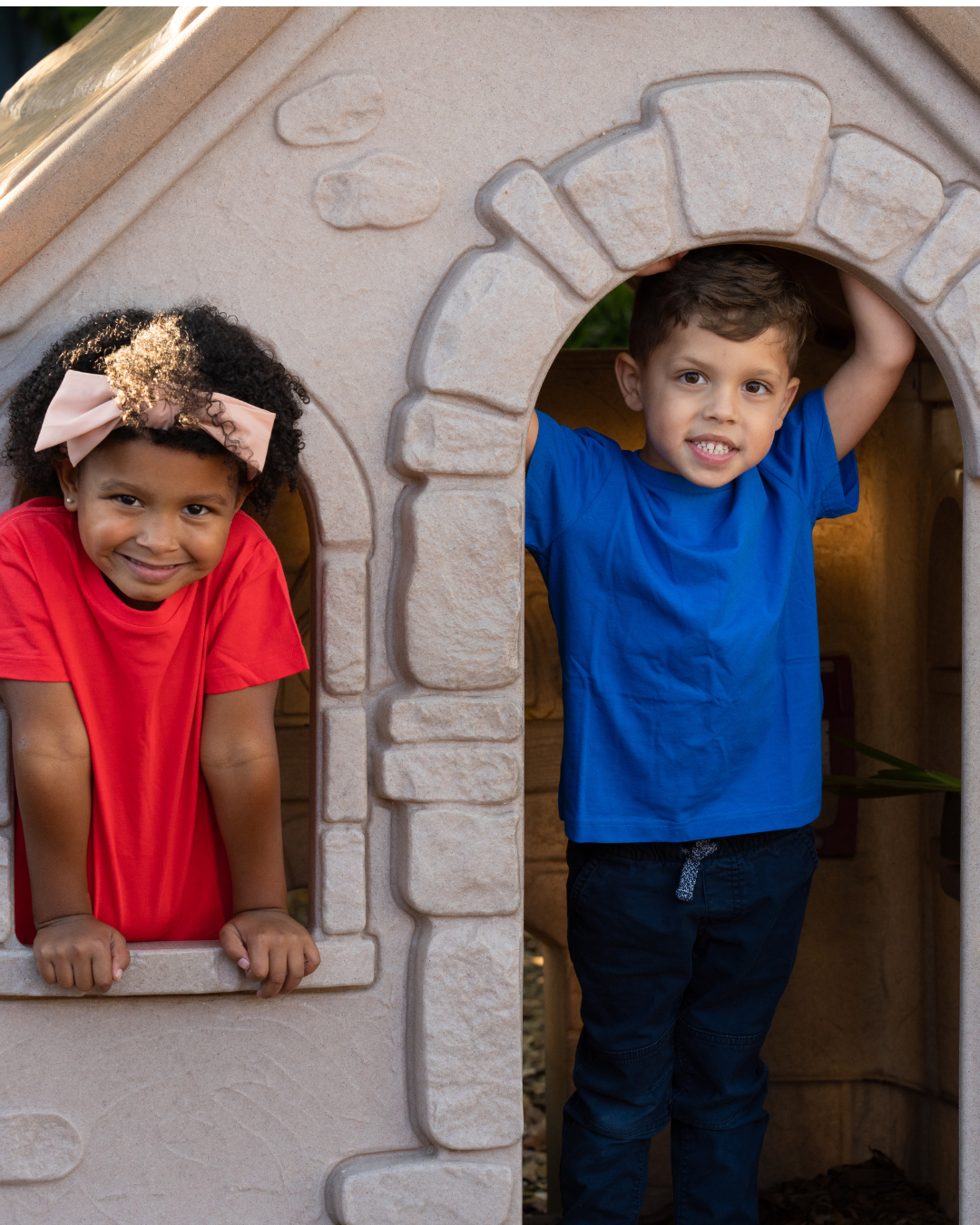
A simple cottage-style cubby on the ground is usually the least demanding on space and the easiest to supervise. There is no fall height, so the surfacing question is simpler. See Best cubby houses in Australia: how to choose one that lasts for the main options.
Plastic playhouses
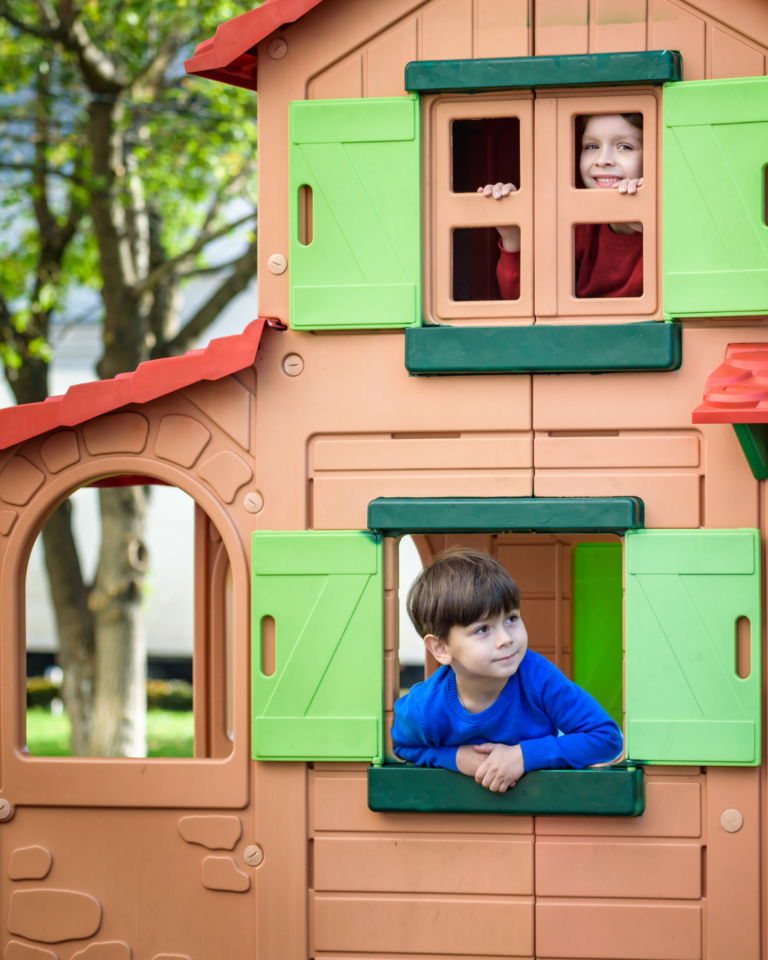
Plastic playhouses are generally more compact, and you can often shift them around the yard. See Wooden vs plastic cubby houses in Australia: which is better? for the trade-offs. You can look at kids outdoor playhouses on Amazon Australia, or the playhouse range at Yardgames.
Smaller timber cubbies
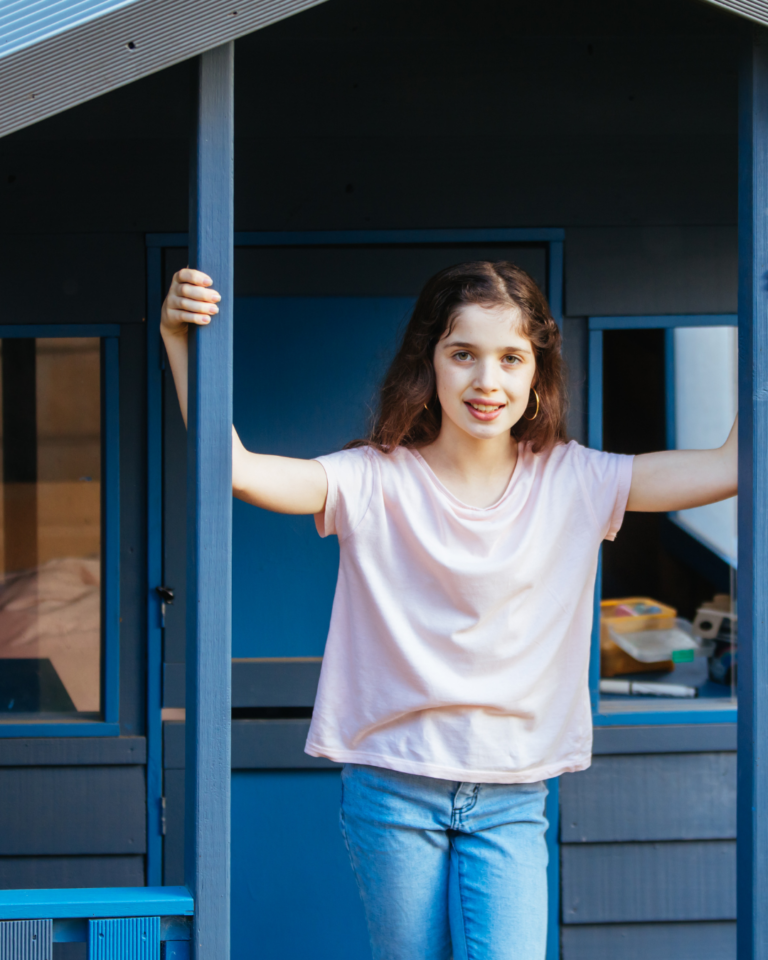
Some timber cubbies are designed for small spaces, with a compact footprint and a simple roofline. Check the maker’s dimensions, and remember the paint, sealant and any base are extra. Browse the Lifespan Kids cubby houses or the Yardgames wooden cubbies and compare footprints.
Indoor and balcony options
If outdoor space is almost zero, a play tent or an indoor cubby might be more realistic. See Indoor cubby houses and play tents in Australia: what to know.
What to skip in a small yard
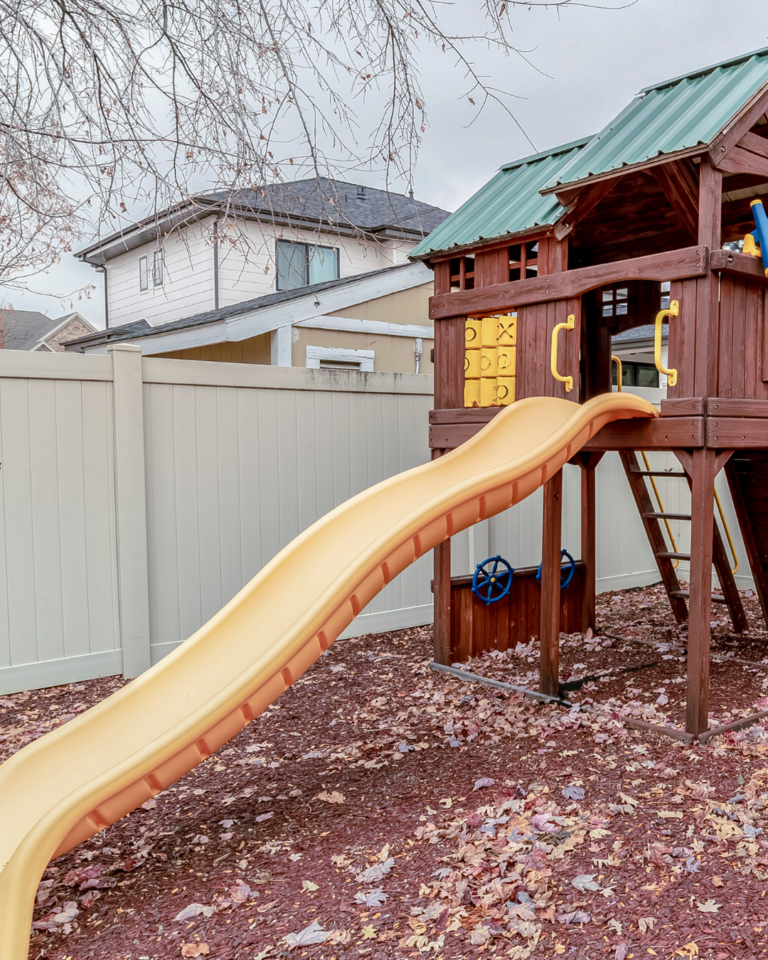
- Big elevated cubbies with slides. They need clear space at the end of the slide and a wide area of surfacing. If you want a slide, check the maker’s space requirements carefully. See Cubby houses with slides in Australia: what to check before you buy.
- Combined play centres. These can take over a small yard quickly.
- Anything with a footprint that leaves no lawn. Kids need some open space as well.
Make a small cubby do more
- Go vertical, within limits. Some cubbies have a small raised deck or a loft. Kidsafe advises that play equipment should not exceed 1.8 m in height for younger children and 2.5 m for older children, and that elevated platforms should have guardrails. See Elevated cubby houses in Australia: platform height, safety and surfacing.
- Use the walls. A chalkboard, a window box or a hook for dress-ups costs little space.
- Fit out the inside. A small table and stools, a play shop or a play kitchen can turn a modest cubby into the centre of the yard. See Cubby house accessories: practical and play ideas for Aussie backyards.
- Choose the right spot. A shaded corner makes it usable for more of the year. A shade sail can help where there is no tree.
Surfacing in tight spaces
If any part of the cubby is raised, Kidsafe’s advice is to provide impact-absorbing surfacing under and around it. Suitable materials include shredded bark mulch, wood chips and non-compacting sand at a minimum depth of 30 cm, and it should not be used on hard surfaces such as concrete or bricks. In a small yard, that can take a large share of the available area, which is another reason to favour a ground-level cubby. See Cubby house surfacing and fall safety: mulch, sand and soft-fall in Australia.
Think about neighbours too
A cubby near the boundary can mean noise and sightlines for the people next door. Even where no formal notice is needed, a chat before you build is good manners. The NSW Department of Planning notes that neighbours do not have to be formally notified for exempt development, but it is still a good idea to let them know. Also think about where roof water runs and whether it will affect the neighbouring lot.
Quick checklist
- Measure the space and mark the footprint on the ground.
- Add clear space for play around the cubby.
- Check boundary and height rules with your council.
- Pick a ground-level or low design if the yard is tight.
- Plan surfacing and shade.
- Check delivery access to the yard.
- Check the maker’s dimensions, age range and assembly needs.