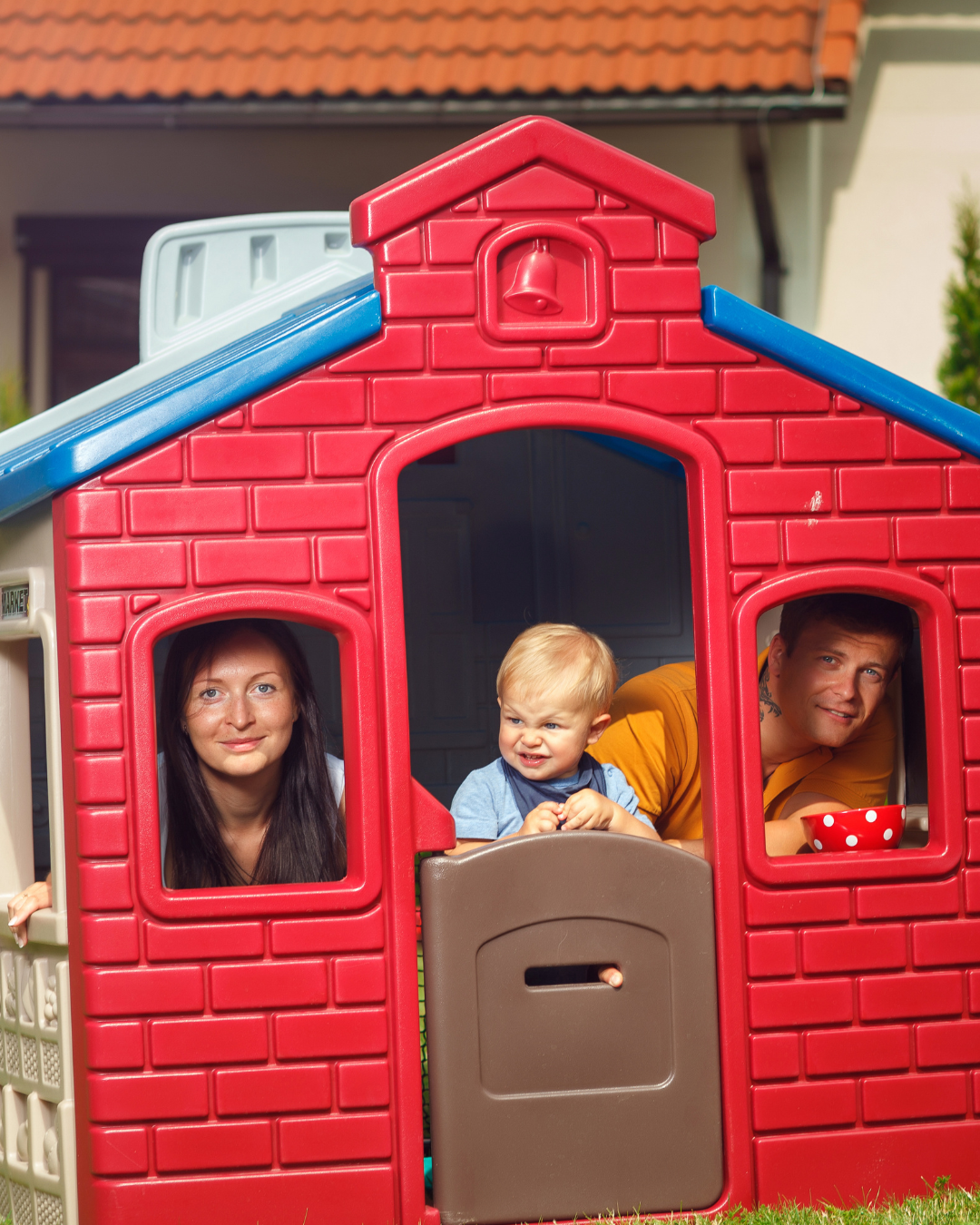
Cubby house ideas for Australian backyards: ways kids use their cubbies
This page may contain affiliate links. See our affiliate disclosure.
A cubby house is more than a box in the garden. It becomes whatever the kids need it to be: a shop, a cafe, a vet clinic, a bush hut, a quiet corner with a stack of books. A few simple ideas can keep it in use for years, and many cost very little.
These are play ideas, not product reviews. Check age ratings and safety warnings on anything you buy, and supervise play, especially with younger kids. We do not publish prices or invented product claims.
Make it feel like theirs
Let the kids have a say. A cubby that feels like their own place gets more use.
- Name it. A painted sign over the door, with the name picked by the kids, goes a long way.
- Choose colours together. See How to paint and maintain a cubby house in the Australian climate for how to paint it safely.
- Add a letterbox. A simple mailbox on a post turns letters, drawings and notes into a game. Check there is nothing sharp.
- Give it an address. House numbers, a doormat and a hook for a bag make the place feel real.
Role-play themes
The shop or cafe
A hatch or window counter turns a cubby into a shop. A play shop or play kitchen adds props. Kids can write menus on a chalkboard, price items with pretend money and take orders from visitors. Pretend food made from fabric or wood is easier to keep clean than the real thing.
The mud kitchen
Outside, a mud kitchen is a favourite. Old pots, spoons and a bucket of water, with some dirt and leaves, can keep kids busy for a long time. Supervise water play, and wash hands afterwards.
The vet clinic or animal hospital
Soft toys become patients. Add a few bandages, a toy stethoscope and some paper for records. If you keep pets, this is also a good way to talk about caring for animals.
The builder’s shed
A toy tool set, some cardboard offcuts and a hard hat make a build site. Keep real tools out of the cubby.
The bush hut or campsite
A rug, a couple of cushions, a torch and a blanket turn the cubby into a camp. Add a bug hotel, some leaves and sticks for a nature-play corner. Kidsafe notes that nature play can be part of a safe backyard play space, and cubbies do not have to be traditional structures.
The reading nook
Cushions, a basket of books and a small solar fairy light string create a quiet place to retreat. It suits a shaded cubby, with good airflow. In hot weather, move the reading inside.
Garden helper ideas
A cubby can be the centre of a small kids’ garden.
- Plant a few herbs or easy vegetables in pots or a raised bed near the cubby, and use a window box for flowers.
- Give the kids their own gardening tools.
- Choose non-toxic plants, and keep garden chemicals well out of reach. Kidsafe’s backyard guide includes poisonous plants in its checklist, so check any plant against a reliable list for your state.
- Add a water bowl for birds, or a bee-friendly flowering plant, to turn the garden into a nature-watching spot.
Seasonal ideas for the Australian year
- Summer. Keep the cubby shaded, use a shade sail, offer water and take breaks. Move heavy play to early morning and late afternoon.
- Autumn. Collect leaves, seeds and gum nuts for craft. Check timber and give the cubby a clean.
- Winter. Rug up and use the cubby for a cold-weather cocoa picnic, under supervision. Check for damp and mould.
- Spring. Repaint, replant, tidy up and tighten fixings. See the maintenance routine in How to paint and maintain a cubby house in the Australian climate.
- Christmas and birthdays. A cubby can be a good place to hide, build or hold a small party.
Games to play in and around a cubby
- Shopkeepers and customers
- Postal workers delivering letters
- Hide and seek, with clear rules about where not to go
- Teddy bears’ picnic
- Treasure hunts that lead to the cubby
- Quiet time with books and drawing
Keep it safe while it is fun
Role play and imagination do not change the basics. Keep these in mind:
- Match the cubby to the child’s age and ability. See Cubby house safety standards in Australia: AS 4685, AS/NZS 8124.6 and Kidsafe.
- Make sure surfacing is in place around any raised floor. See Cubby house surfacing and fall safety: mulch, sand and soft-fall in Australia.
- Keep ropes, cords and long scarves out of play areas, so they cannot create a strangulation hazard.
- Do not store tools, chemicals or sharp items in the cubby.
- Keep the area free of sticks, stones and clutter.
- Make sure kids know not to climb on the roof.
- Supervise, especially for younger children and in hot weather.
Low-cost ways to start
You do not have to buy everything. Look around first.
- Old pots, pans and utensils for the kitchen
- Wooden crates or boxes for shelves, checking for splinters
- Offcuts of fabric for curtains and bunting
- Jam jars for pretend potions, if made of plastic and safe for kids
- Cardboard boxes for shops and post offices
- Picture frames with a drawing from each child
Check each item for sharp edges, small parts and splinters before it goes in.
Looking for a cubby to start with?
If you are still deciding on a cubby, start with Best cubby houses in Australia: how to choose one that lasts. For fit-out ideas, see Cubby house accessories: practical and play ideas for Aussie backyards. For a cubby for a small space, see Cubby houses for small yards in Australia: what fits and what to skip.
Some links on this page are affiliate links. We may earn a commission if you buy, at no extra cost to you. See our Affiliate disclosure page.
